Why Is My Furnace Leaking in the Summer? Twin Cities Homeowner’s Troubleshooting Guide
Finding a puddle of water at the base of your furnace in the middle of July can be alarming. After all, your furnace’s primary job is to heat your home during our harsh Minnesota winters, and it likely hasn’t run a heating cycle in months.
So, why is there water pooling beneath it during a humid Minnesota summer?
The short answer: It is rarely the furnace itself that is at fault. It is almost always your air conditioning system—specifically, a failure in the condensate drainage process.
Because your furnace and your central AC system often share the same blower compartment and drainage line, when the AC’s moisture removal process hits a snag, the water ends up appearing exactly where you’d expect the furnace to be. As a home inspector, this is one of the most common issues I find during late-summer walkthroughs; it is a classic case of a system needing a little TLC to keep your home's moisture levels in check.
The Connection: Why Your AC and Furnace Share Space
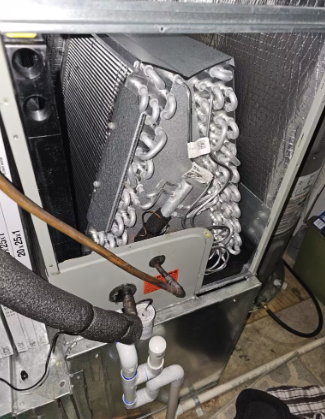
Inside your home's HVAC system, your furnace and air conditioner function as close roommates. Sitting directly above or within your furnace cabinet is a critical AC component called the evaporator coil (often referred to in the industry as an "A-coil" due to its shape).
The Science of the 'Indoor Rain': As your air conditioner runs, this coil becomes ice-cold. Warm, humid Minnesota air is blown across these coils, which rapidly cools the air before it's sent back into your living space. However, much like a cold glass of iced tea on a hot, muggy day, this process creates massive amounts of moisture (condensation) on the surface of the coil.
The Inspector’s Perspective: During a standard home inspection, I examine the drain pan beneath this coil. It’s designed to catch that liquid and funnel it into your home's drainage system. When this design works, you don't even know it's happening. When it fails—because of a clog or a shifted pan—that ‘indoor rain’ has nowhere to go but down, which is exactly why you end up with that unexpected puddle at the base of your furnace.
Where is that water supposed to go?
Underneath the 'A-coil' sits a primary drain pan designed to catch every drop of that condensate. From there, the water is channeled out of the HVAC system through a PVC drain tube. Depending on how your basement or utility closet is configured, this tube directs the water to one of two places:
A nearby floor drain: The simplest and most reliable method, using gravity to move the moisture away from your home.
A condensate pump: This is a small plastic box sitting on the floor or mounted to the furnace cabinet. It uses a float switch to detect when the box is full, then mechanically pumps the water up and out of your home.
The Inspector’s Insight: As an inspector, I’ve seen countless setups where these systems fail. A condensate pump, for instance, has a mechanical pump and an electrical float switch—both of which can—and eventually do—fail. If you have a pump, it’s a critical piece of hardware that needs to be checked annually. If you have a floor drain, I’m checking to make sure the PVC line is properly pitched so that the water flows out consistently rather than pooling in the pan and inviting mold or algae growth.

The Clog: When Good Water Goes Bad
Because this dark, damp environment is a perfect breeding ground for algae, slime, and dust debris, that narrow PVC drain tube can easily become choked up and clogged. This is a common occurrence in our humid Minnesota summers, where your system is tasked with pulling massive amounts of moisture out of the air.
When a blockage happens, the condensation has absolutely nowhere to go. It backs up quickly, leading to two common—and messy—scenarios:
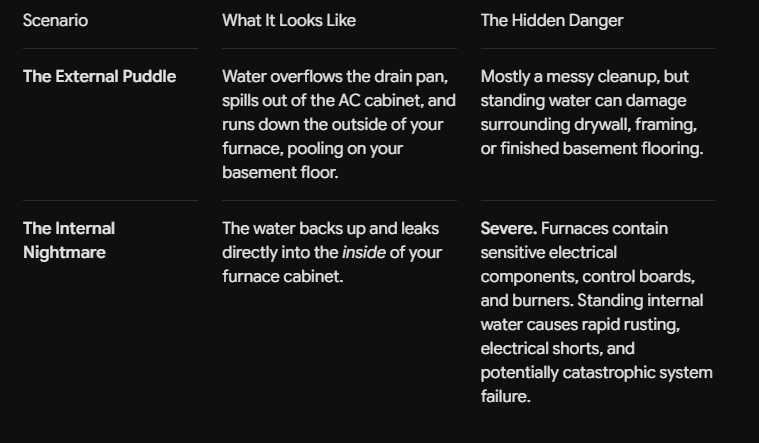
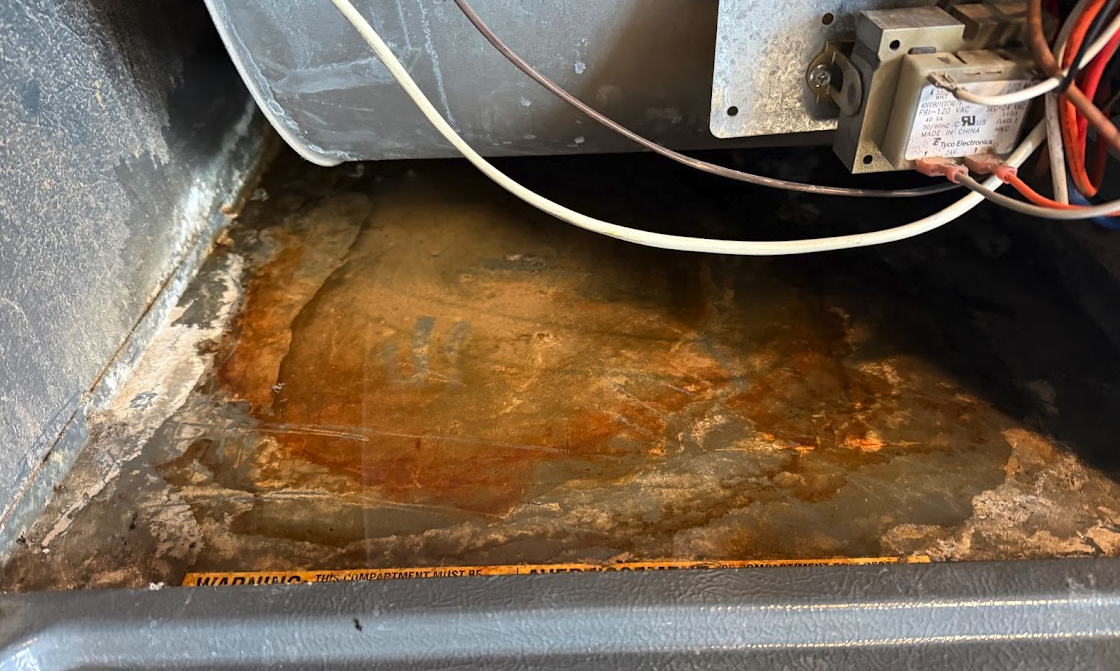
The Trailblazer Inspection Insight: I often find that homeowners don't realize there is a problem until the water has already caused secondary issues, such as rust on the furnace base or mold growth on nearby subflooring. When I inspect a system, I look for these 'signs of struggle'—like water stains on the furnace jacket—that tell me the unit has been fighting a losing battle against a clog for some time. Identifying these signs early is the difference between a simple maintenance task and a costly repair call.
What to Do if You See Water Leaking From Your HVAC System
If you spot water pooling around the base of your heating and cooling system, don't panic—but do act quickly to minimize the risk of secondary water damage. Follow these steps to secure your system:
Shut off the AC immediately: Turn your thermostat to the "Off" position. This halts the cooling cycle and instantly stops the production of new condensation.
Switch off the furnace power: Locate the service switch (which typically looks like a standard wall light switch mounted on or near the furnace cabinet) and flip it to "OFF." This protects the internal blower motor and control board from potential shorts caused by moisture intrusion.
Clean up the standing water: Use a wet/dry shop vac or old towels to thoroughly dry the area. This prevents damage to your flooring and keeps your utility space from becoming an incubator for mold and mildew.
Call a local HVAC professional: Unless you are highly comfortable clearing PVC lines with a vacuum or troubleshooting a condensate pump, it is best to call a licensed HVAC technician. They can safely flush the line, test the condensate pump's float switch, and inspect internal components for signs of rust or electrical damage.
The Trailblazer Inspection Insight: "While you wait for your technician, check your air filter. As an inspector, I often find that a neglected, dirty filter is the real reason a system is freezing up and leaking. If your filter is clogged, replacing it now might just save your HVAC pro a trip—or at least give them a head start on diagnosing the issue."


Frequently Asked Questions
Can I just let the water dry on its own?
Absolutely not. Water inside a furnace cabinet is highly destructive. It creates immediate contact with steel components, electronic control boards, and gas burners. Leaving standing water in your HVAC system leads to rapid rust, structural corrosion, and electrical shorts—all of which can turn a simple maintenance task into a premature and expensive furnace replacement.
How do I know if my condensate pump is broken?
If your drain line feeds into a small plastic reservoir box (a condensate pump) and that box is overflowing, your system has failed. This usually indicates that the pump's mechanical float switch is stuck or the internal motor has burned out. If the water level doesn't drop when the box is full, the pump is likely dead and needs immediate replacement.
Can a dirty air filter cause my furnace to leak water?
Yes, indirectly. This is one of the most common issues I find during inspections. A clogged air filter restricts airflow across your "A-coil." Without enough warm air passing over the coil, the surface temperature can drop below freezing, turning the coil into a solid block of ice. Once the unit cycles off, that massive amount of ice melts simultaneously, flooding the drain pan and overflowing the system.
How often should my AC drain line be cleaned?
I recommend a professional flush at least once a year, ideally during your springtime AC maintenance. Preventing slime and algae buildup is the most effective way to avoid mid-summer leaks. If your system is prone to high humidity, an annual preventative treatment can save you the cost of emergency repairs and water damage cleanup.
Buying or selling a home in the Twin Cities area? Understanding your home's mechanical systems is the best way to prevent expensive surprises down the road.
Got Questions About Your Home's Systems? Let's Chat!
Navigating residential utility systems can be tricky. Understanding how your home’s cooling and heating components interact is the first step toward preventing major, costly damage. Whether you are prepping your home for the market or simply want to ensure your current property is running as safely and efficiently as possible, having a professional perspective makes all the difference.
You shouldn't have to guess about the health of your home.
If you have questions about your HVAC setup or you're ready for a comprehensive look at the mechanical health of your property, reach out to Trailblazer Home Inspections. I am here to provide the clarity, technical detail, and honest answers you need to make your next move with total confidence.
Let’s get the answers you need.